
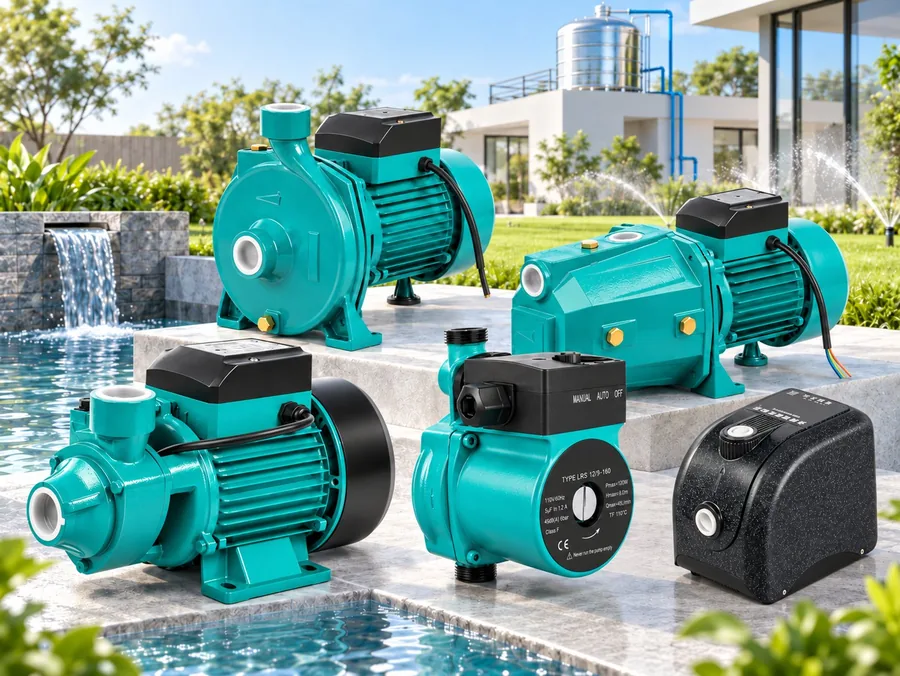
These three pump types often appear in the same clean-water catalog. They are not interchangeable just because the motor labels show the same horsepower.
First decide whether the pump will be fed by a flooded inlet or must draw water from below. Then compare how much water is required at the working head. That usually shortens the list faster than comparing motor power.
| Type | Often considered for | Check before selecting |
|---|---|---|
| Peripheral | Compact, relatively low-flow clean-water duties where comparatively higher pressure is useful. | Actual delivery at the target head; water cleanliness; whether the pump is primed. |
| Centrifugal | Clean-water transfer and irrigation where more flow is required. | Flow–head curve, inlet conditions, pipe sizing and operating range. |
| Self-priming jet | Above-ground installation drawing from an appropriate shallow source. | Actual suction lift, water level changes, suction-line sealing and priming procedure. |
A tank beside the pump
If the tank outlet feeds the pump inlet under positive pressure, the job is usually a clean-water duty-point comparison. A peripheral pump may suit a modest flow requirement; a centrifugal model may be a better starting point when the required flow is higher. Neither conclusion is automatic: put the required flow and head on both performance curves.
A shallow well below the pump
This changes the suction conditions. A self-priming jet pump can be a useful candidate, but “self-priming” does not mean unlimited suction lift or dry operation. Account for the lowest expected water level, pipe friction and air leaks. Follow the model’s installation instructions for filling and priming.
Three mistakes we see in requests for quotation
- Choosing by horsepower alone. Ask for delivered flow at the required head instead.
- Comparing maximum head with required operating head. Maximum values at different ends of a curve do not occur simultaneously.
- Ignoring the inlet. A long or leaking suction line can defeat an otherwise reasonable pump choice.
For distributors preparing a product range, keep one application note beside each candidate model: source water, working flow/head, voltage, connection size and whether a controller is supplied. This makes catalog comparisons useful to the end customer.
Comparing models for your market?
Share the application, suction conditions and target duty point through the quotation form. Request curves for each proposed option.
More water pump buying guides
Technical background: KSB, peripheral pump; KSB, self-priming pump.