
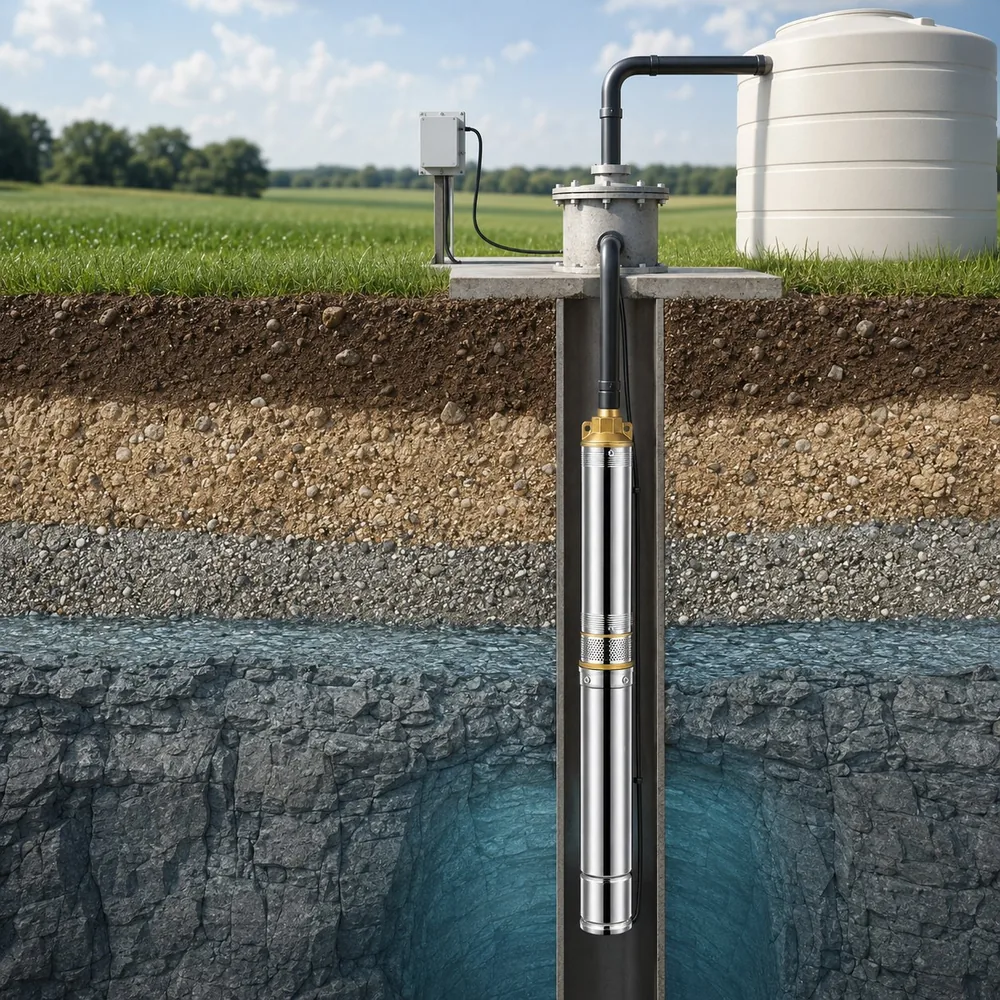
“The borehole is 80 metres deep” does not mean you need a pump that delivers 80 metres of head. The borehole bottom, the water level while pumping and the outlet elevation are three different measurements.
For a useful selection, start with the dynamic water level: the depth to water while the well is pumping at the intended flow. This level may be lower than the resting, or static, level. The pump must also fit the borehole and remain adequately submerged under the conditions specified for that model.
Six measurements to collect
- Borehole inside diameter. Check the casing’s actual clear diameter, not just the nominal drilling size.
- Static and dynamic water levels. Record the pumping flow and how long the well was tested. Ask for the lowest expected operating level.
- Well yield. The requested pump flow should be compatible with sustainable well output.
- Discharge target. Record the tank level or required pressure at the use point.
- Pipe and electrical run. Include rising-main length and diameter, power supply, cable distance and controls.
- Water quality. Sand, temperature and chemistry can affect the permissible pump and materials.
Work from the operating water level
As a simplified open-tank example, suppose water is 35 m below ground while pumping, and the outlet tank water level is 15 m above ground. The static elevation difference from operating water level to the tank is about 50 m. Add pipe and fitting losses at the intended flow. If the destination is a pressurized network, include the required delivery pressure as head. Confirm the result against the actual pump curve; do not treat the 80 m borehole depth as the duty head.
Install the pump sufficiently below the lowest expected dynamic water level and above sediment at the well bottom, following the manufacturer’s installation requirements. Verify motor cooling, cable sizing and protection with the exact equipment documentation. A well that draws down heavily may need a lower-flow selection or dry-run protection.
Requesting a borehole pump?
Send the borehole diameter, static/dynamic levels, tested yield, tank elevation, pipe route, voltage and water-quality notes to CHANGHONG. Explore the deep well pump range.
More water pump buying guides
Technical background: Xylem, borehole pump selection mistakes; Grundfos, total dynamic head.